
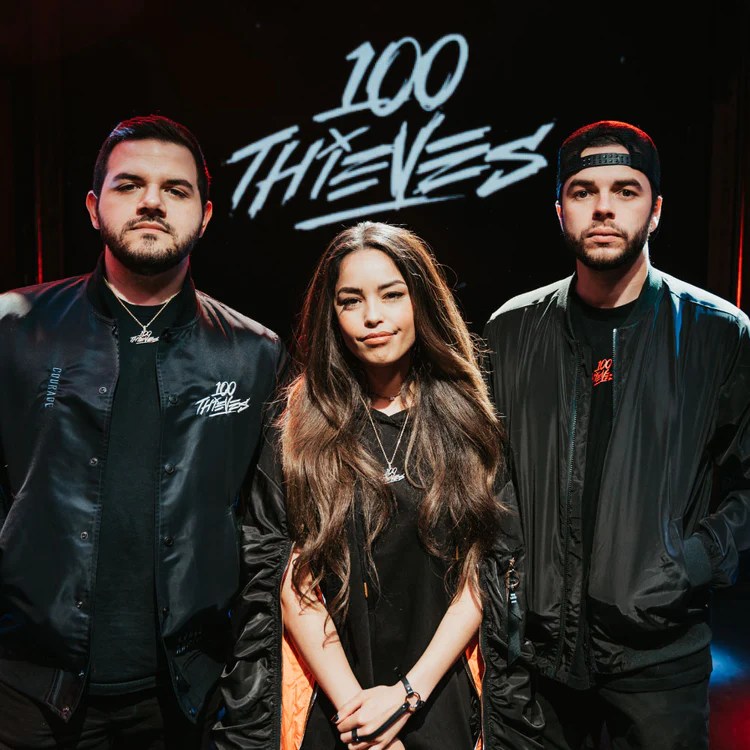
A breakthrough brand
I discovered 100 Thieves in 2022 through the Interbrand Breakthrough Brands report. What caught my attention is the smart web system behind this company.
It all starts with one gaming champion, Matthew “Nadeshot Haag” who creates 100 Thieves to put together eSports teams to win championships.
The naming itself creates a “tribe effect”. Nadeshot explained that he likes that it represents the hustling culture. Hard work that leads to success.
An influence pyramid
Under this name, each competing member is automatically a brand ambassador. As gamers, many of them are also content creators with fans, therefore what they do, say and wear is of interest to their followers, and that’s exactly what the company decided to activate through the years.
It’s not a surprise if their TikTok has 1.9M followers.

From brand partnerships to the development of an apparel brand and later even computer accessories, an energy drink and even their own video game.
Too opportunistic ?
Although it’s smart, it may also feel a bit too opportunistic. The brand has unfortunately been laying off 20% of its employees lately, due to an accelerated growth curve that may have not been ideally managed.
The reason why I remain interested in this brand is the community based model.

Red Bull was built on a similar equation by endorsing athletes and artists who each became satellites of the brand sharing their own followers. This halo system puts the brand at the heart of an influence mechanic where smaller and separate communities are exposed to the brand’s image. Instead of trying to communicate through a brand-to-consumer approach, they focus on attracting the right influencers to their “team” and let them do the work.
It becomes brand-to-influencer-to-consumer approach except in 100 Thieves’ situation, these are not just paid partnerships. They are actual members and employees of the brand who represent this “cool tribe” that the followers would want to be a part of and therefore all the keywords, private jokes and objects they use become “bankable” symbols of their belonging.


 Worlds.